Layering for Dogs: 1+1=3
Why layering isn’t just for humans
Layering is second nature for people who spend time outdoors, especially families with kids. But did you know the same idea works for dogs too? Dogs need the most help in cold and wet conditions, but that doesn’t mean you need a different garment for every type of weather.
The trick is to choose clothes that work well on their own and even better together. In fact, with just two well-chosen pieces, you’ll be ready no matter what the weather throws at you. Mix and match them, and your dog will stay comfortable in cool breezes, icy cold, summer rain, or anything in between.
Layering isn’t just good for your dog either; it’s kinder to the planet and easier on your home, too. You won’t need a new outfit for every forecast, and your cupboards won’t be overflowing with clothes for every season. Fewer pieces, more possibilities: now that’s the beauty of layers.
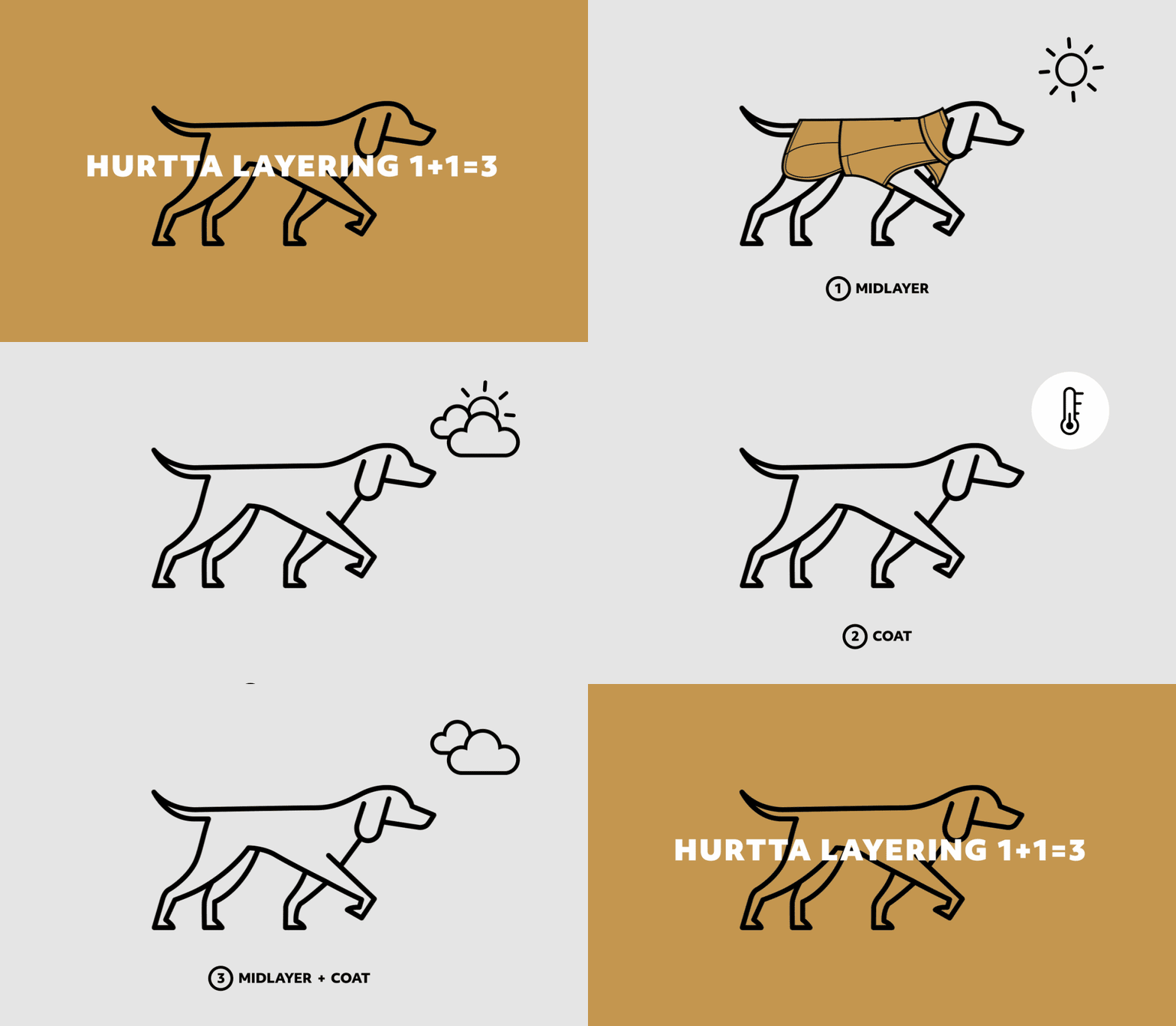
The three layers of dog clothing
Layering is simple: a base layer, an insulating layer, and an outer layer. Together they give you a flexible system you can adjust to the weather. With just these three levels you can manage warmth, moisture, and protection without filling your cupboard with endless clothes.
1. Your dog’s coat is the natural base layer
Dogs already have their own base layer – their fur. Most coats protect the skin and handle moisture well, but the type of coat decides what extra layers are needed. Some dogs have thick undercoats that insulate like padding, while smooth coats do little to hold in warmth. And some coats soak up water quickly and take forever to dry. For example:
- Retrievers have oily fur that naturally resists water.
- Companion breeds with silky or fluffy coats soak up water quickly and take longer to dry.
- Short-haired and hairless dogs need extra protection from wind and cold.
- Herding breeds often have thick coats with air pockets that trap warmth like insulation.
Dogs without undercoats, like Poodles and Lagotto Romagnolos, feel the cold most because thin or silky coats don’t hold warmth.
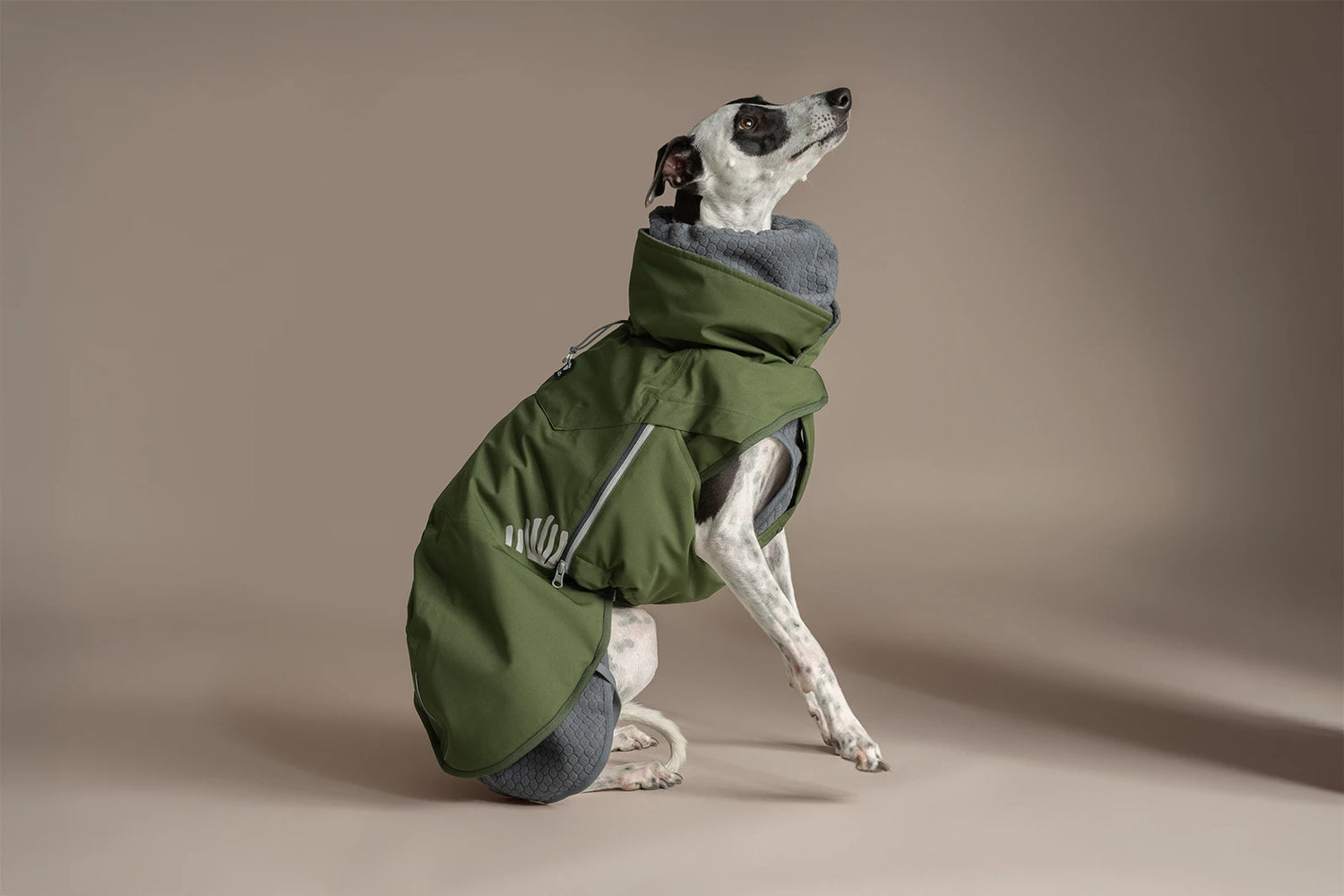
2. The insulating layer keeps warmth in
The insulating layer’s job is simple: hold on to heat and keep the body warm. Materials like fleece, wool, and padded fillings are perfect because they are light, flexible, and warm. For dogs, comfort matters too. Fabrics should feel soft against the skin and stay quiet when the dog moves. Foil-knit linings are especially effective, reflecting the dog’s own body heat and supporting circulation. Soft fleece is another tried-and-true choice you’ll find in most midlayer pieces.
3. The outer layer protects in all weather
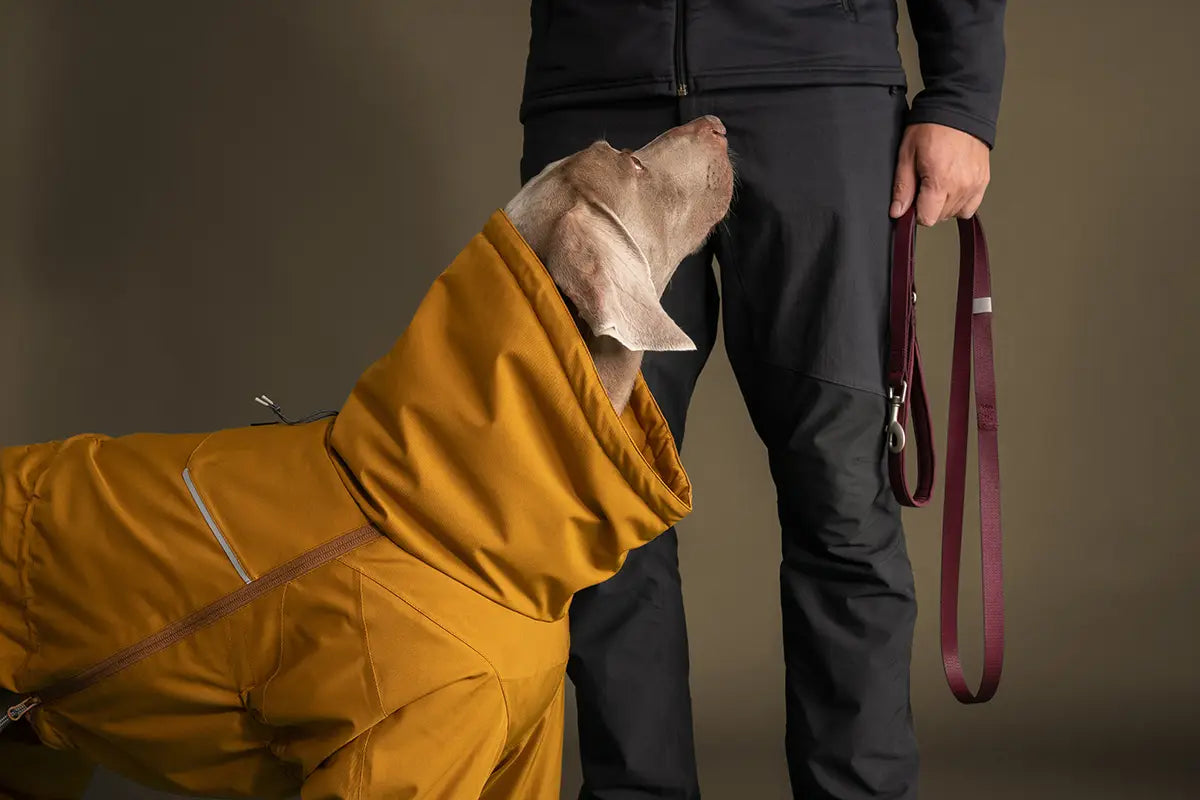
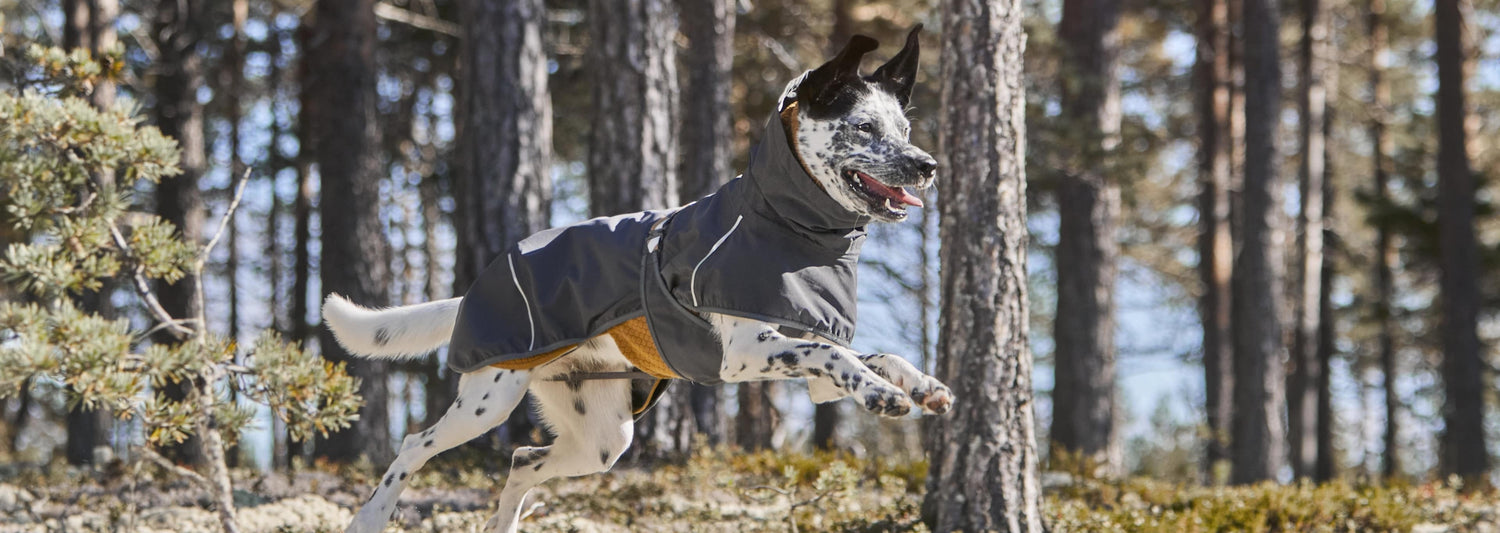
The outer layer is your dog’s shield against wind, rain, snow, and slush. It can be a lightweight shell or a padded version that adds extra warmth. These fabrics are windproof, waterproof, and breathable. A good outer layer also needs to adjust to different body shapes and allow the front legs to move freely, without rubbing or holding your dog back from play.
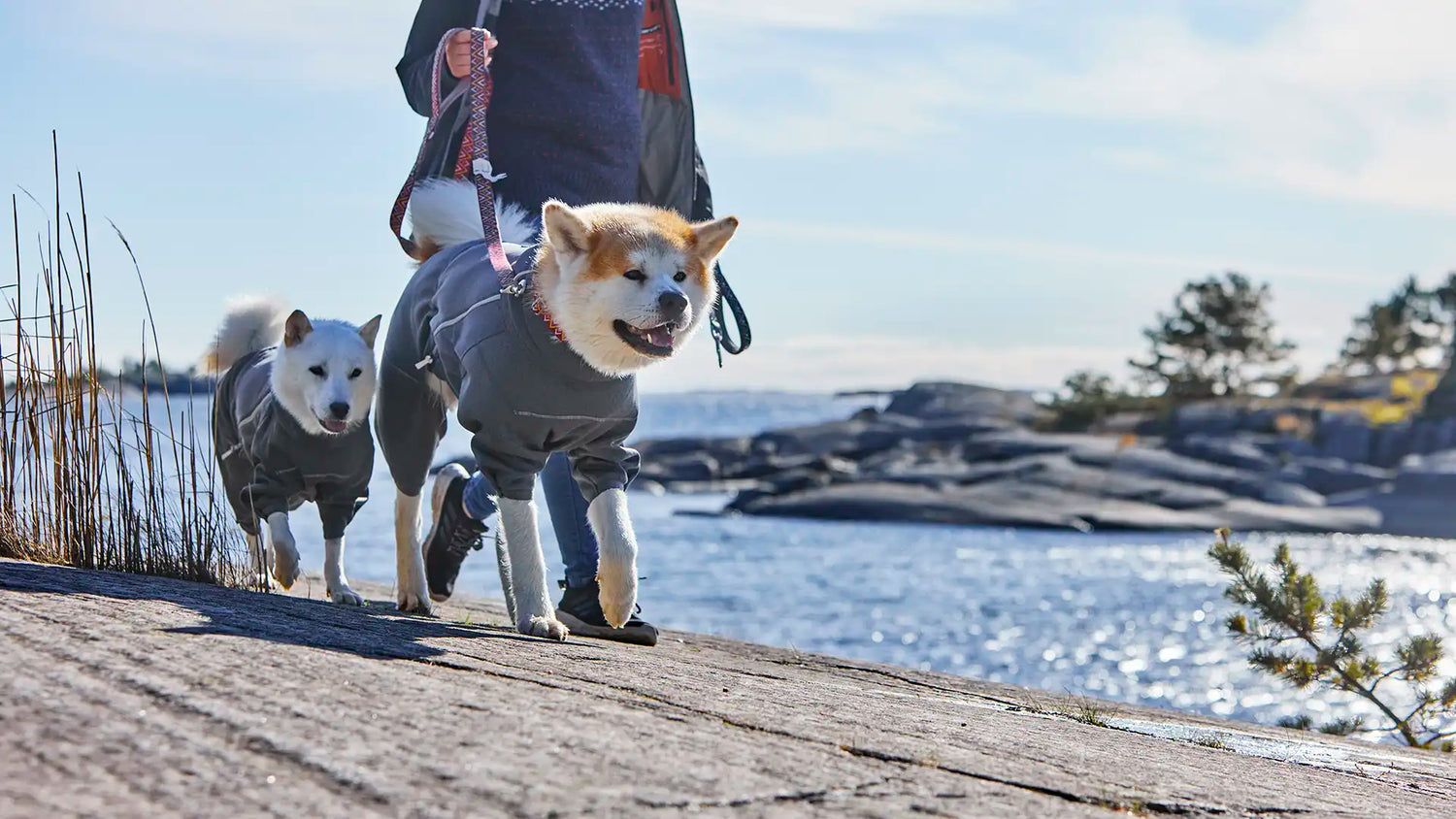
Midlayer garments
Midlayer pieces are made to be worn on their own in cool, dry weather or as an extra layer of warmth under a padded jacket, raincoat, or overall. Hairless, short-coated, or freshly trimmed dogs often need this extra protection earlier in autumn than long- or thick-coated breeds. A midlayer can also be handy indoors or during travel when the temperatures drop. For active dogs, it’s the perfect piece for warm-ups and cool-downs.
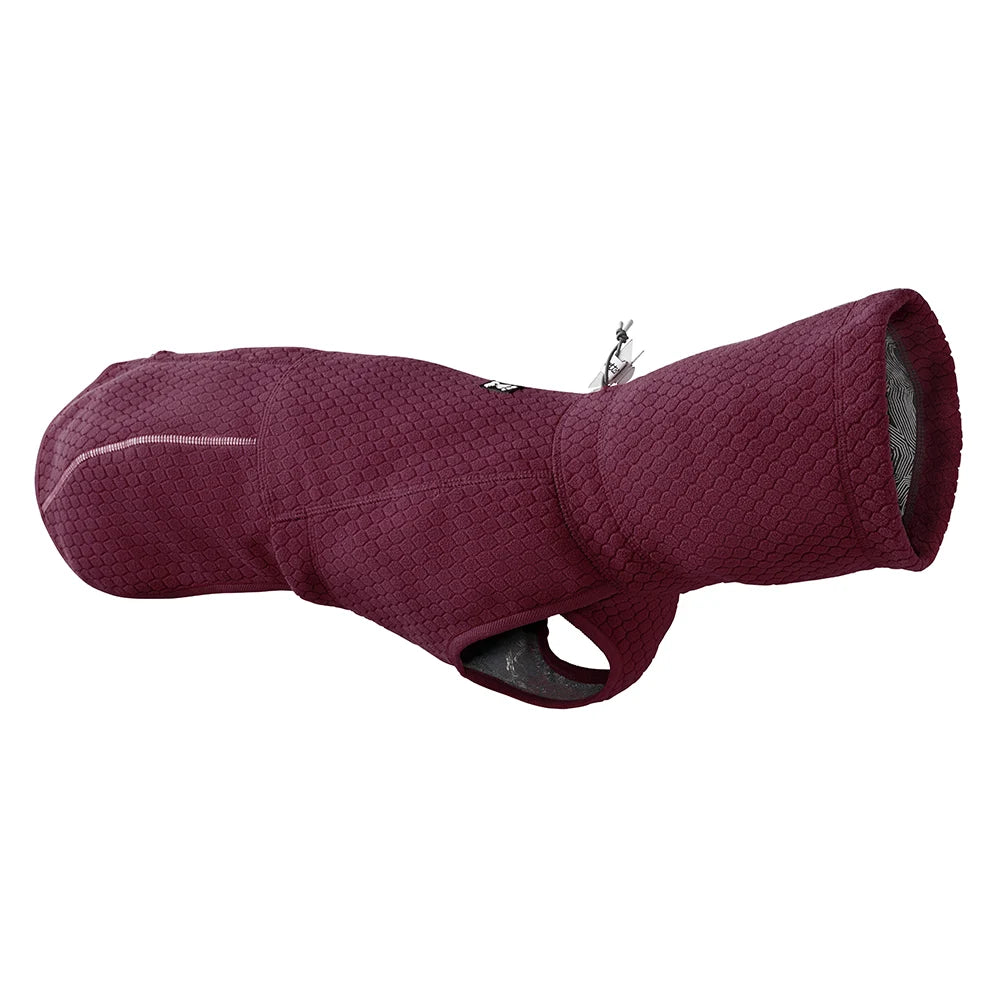
Warming Midlayer Dog Jacket


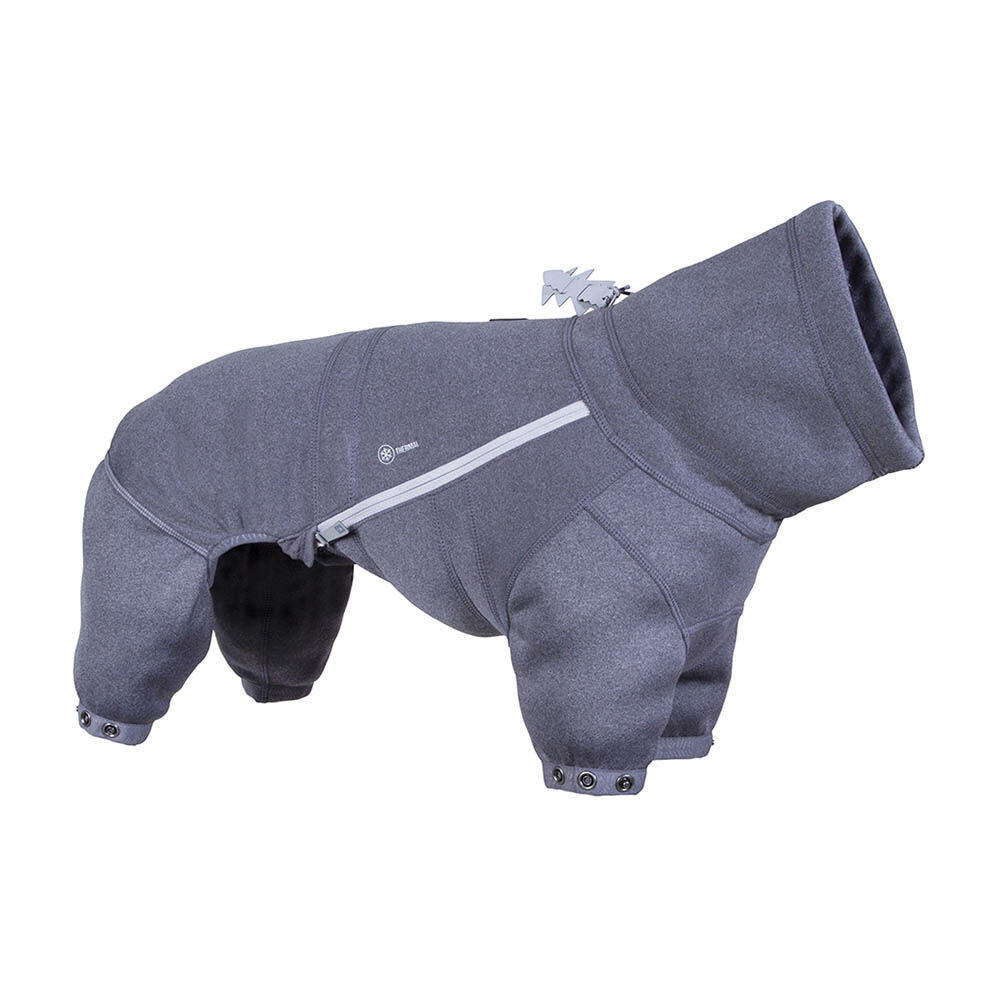
Midlayer Overall
 Blackberry
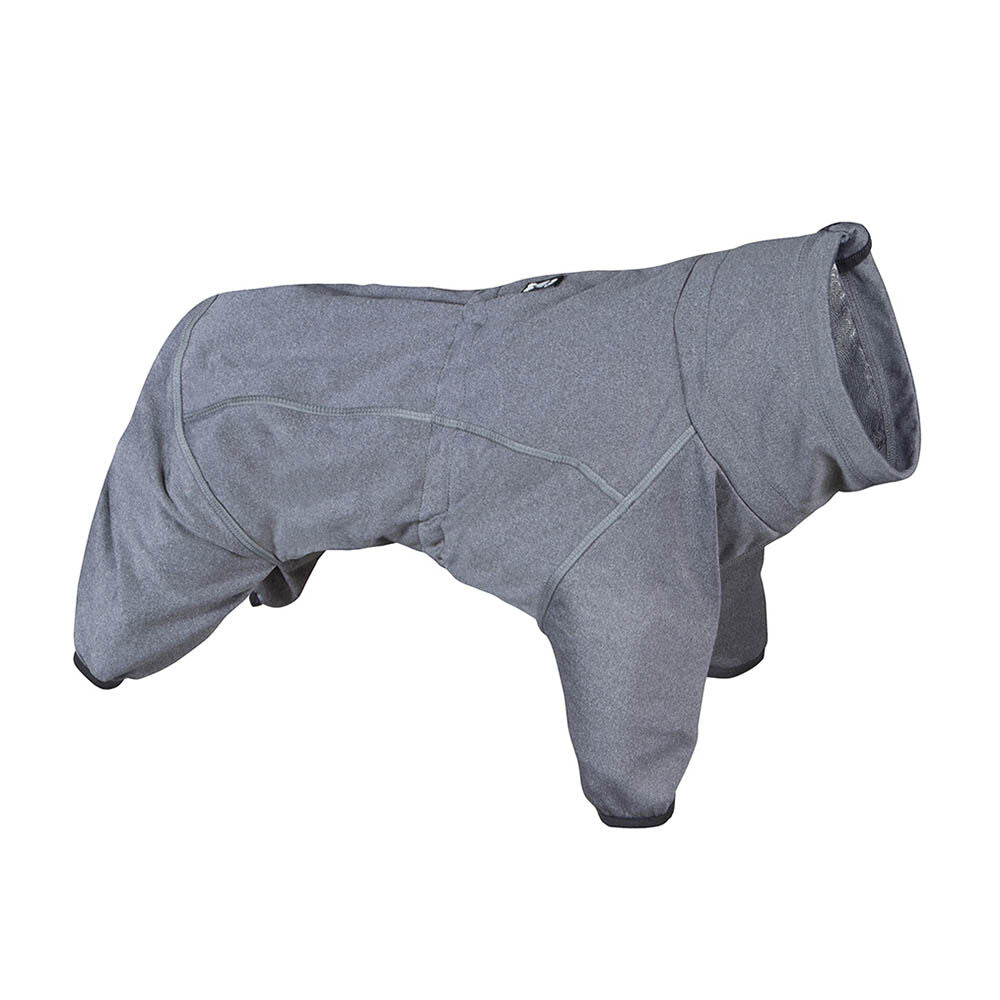
Body Warmer
 Carbon Grey
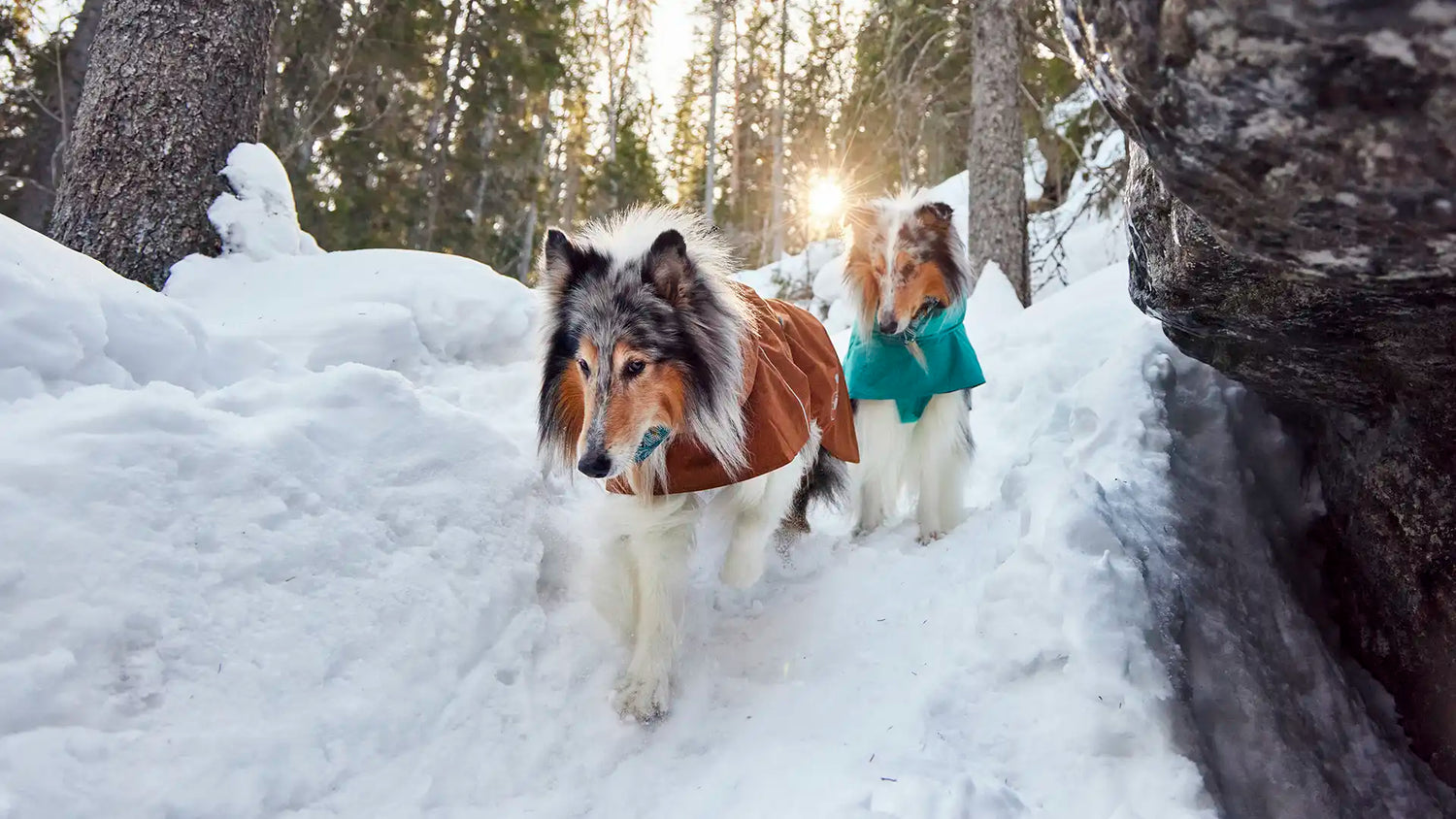
Jackets and overalls as outer layers
A well-designed shell or padded garment works beautifully on its own in many conditions. It also doubles as the outer layer in a layered outfit. Whether you choose a raincoat, a winter jacket, or an overall, the right outer layer will keep the elements out and give you flexibility in how you dress your dog.
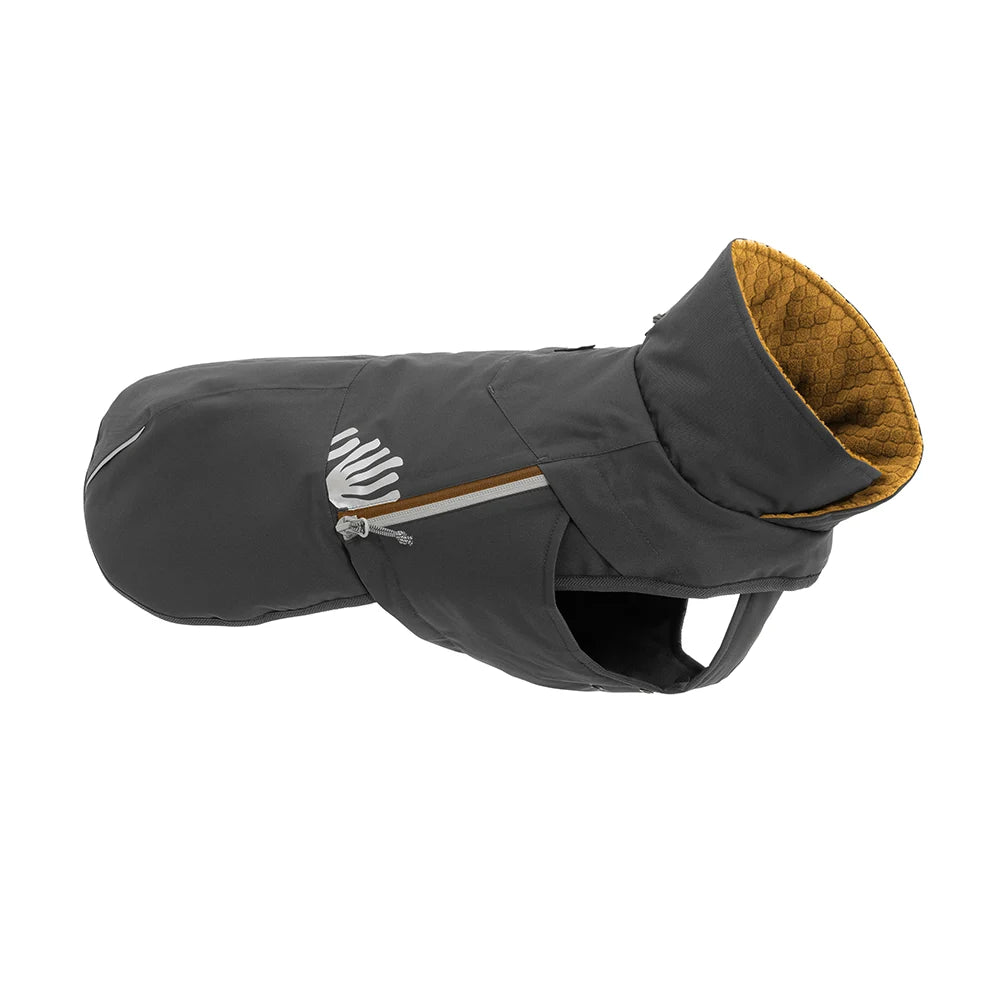
Walk All-Season Jacket

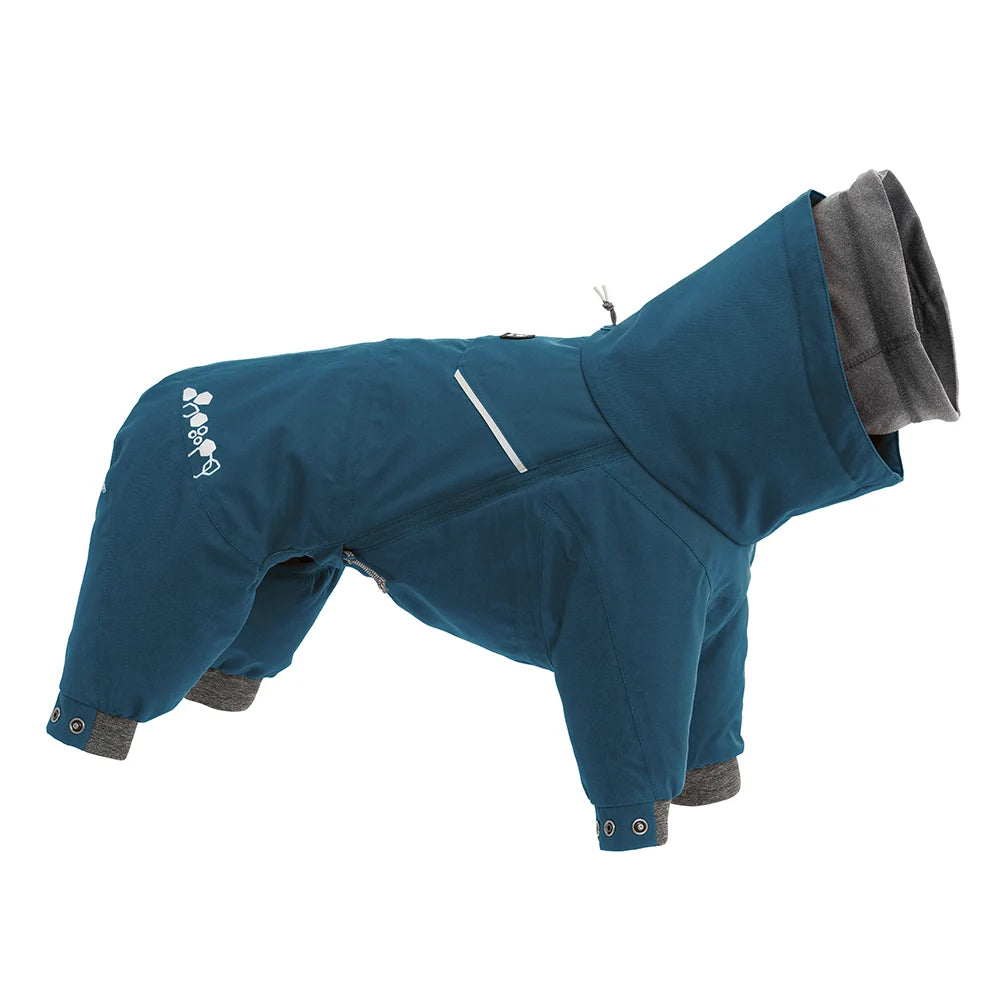
Extreme Overall II

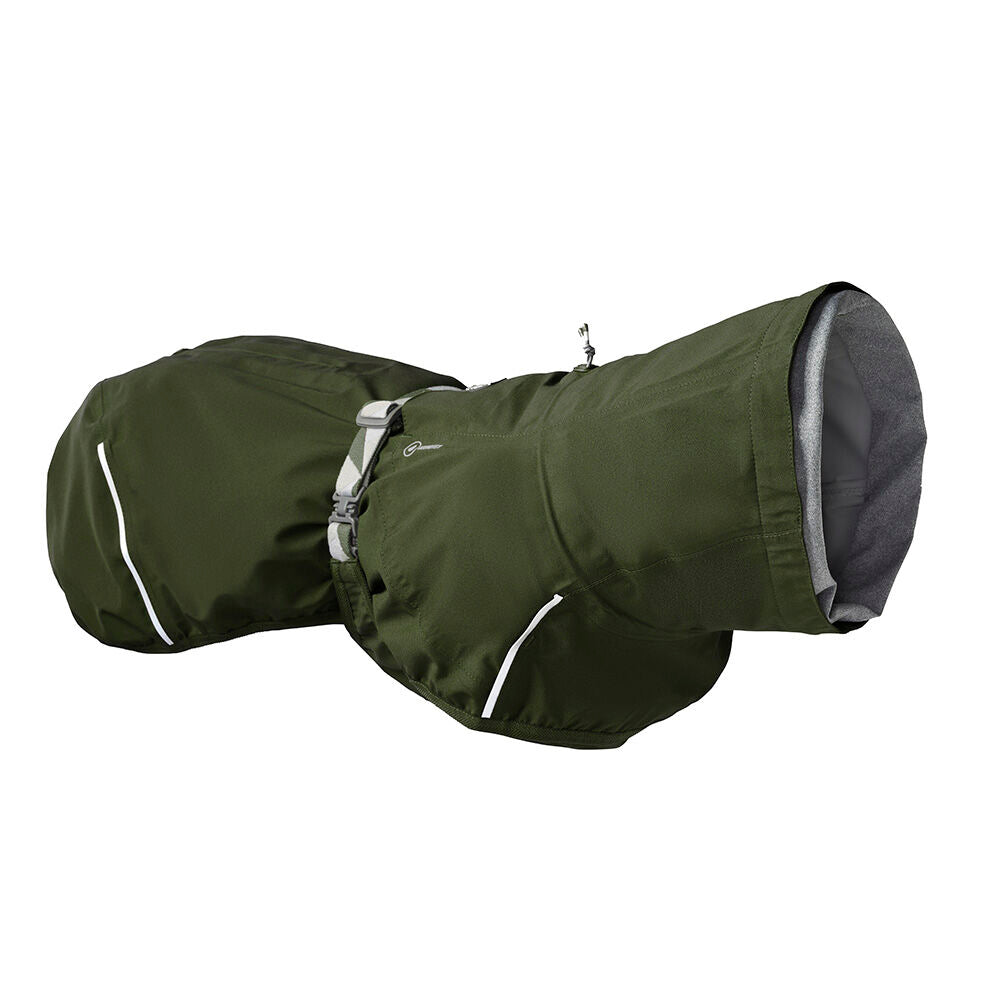
Mudventure Dog Coat

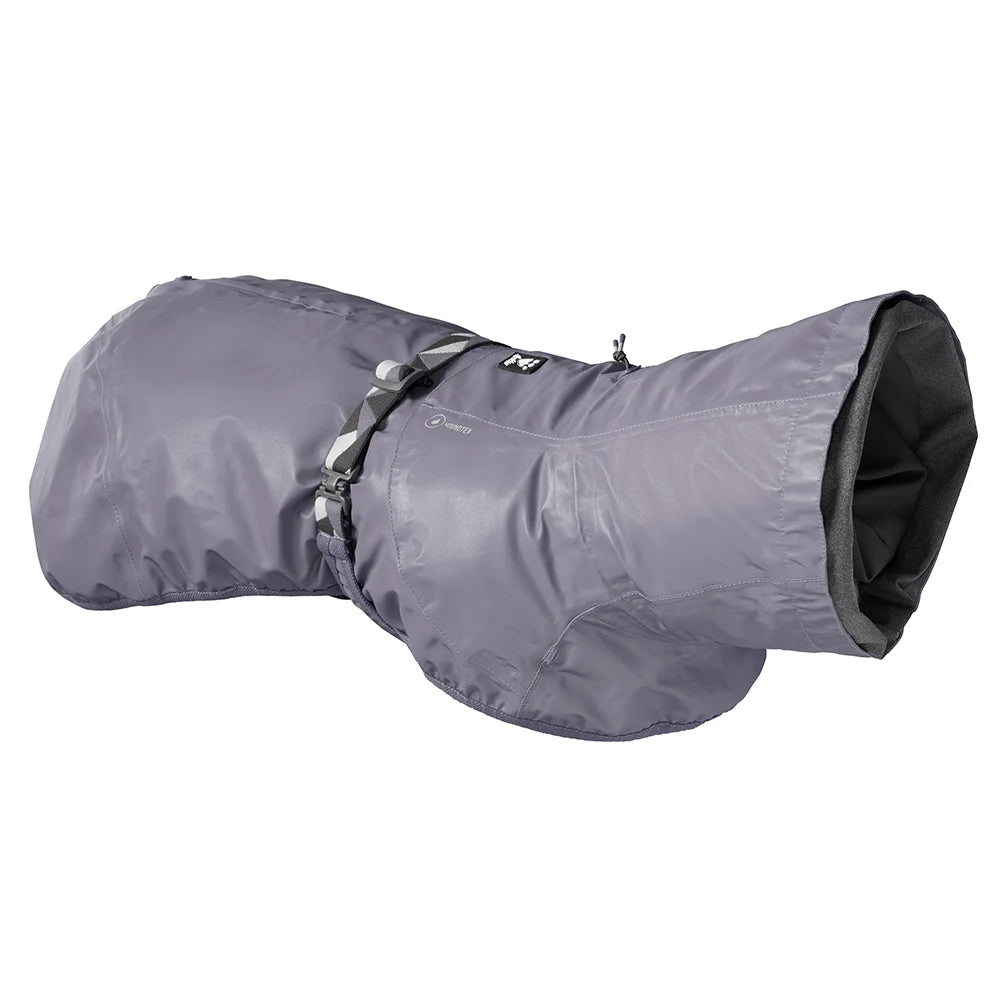
Mudventure Reflective Coat


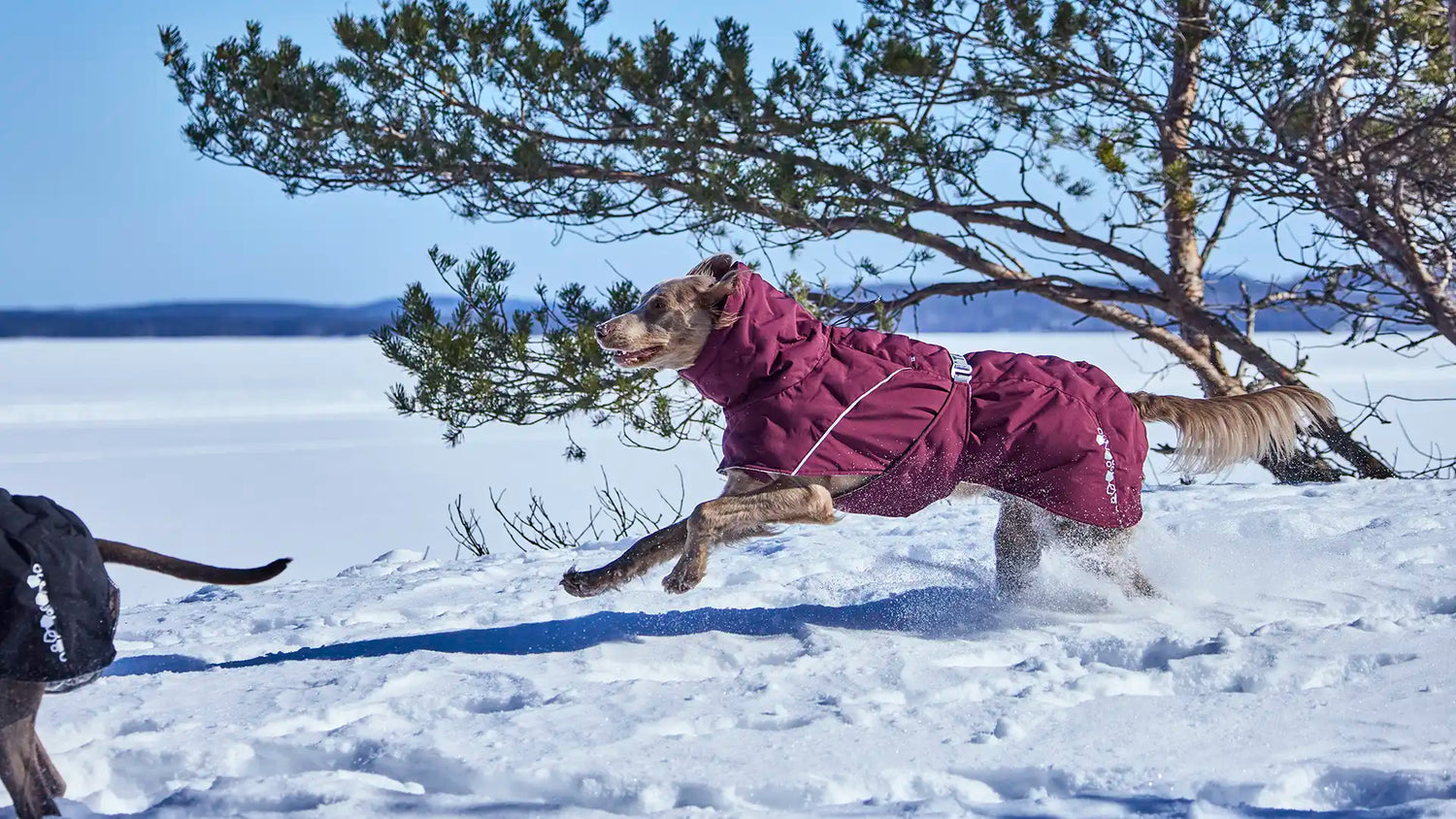
Midlayer and shell combinations
The real benefit of layering shows up when you combine two garments that also work on their own. Together they create a third option, covering more conditions and giving your dog the best of both worlds.
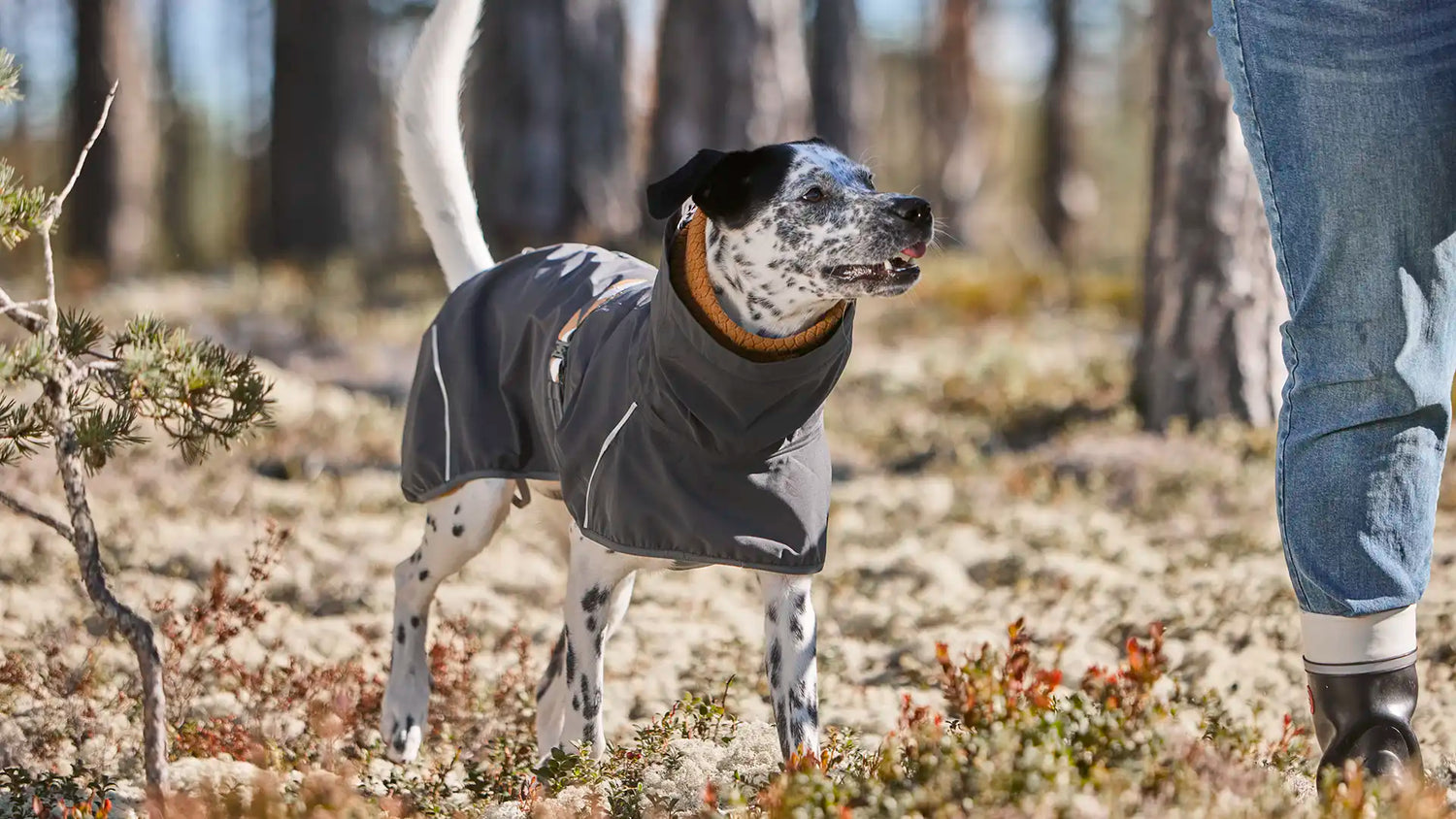
Midlayer + raincoat
A raincoat with taped seams and a high collar keeps even the wildest rain and wind at bay. Add a warming midlayer underneath and you have almost the same warmth as padded clothing. For many dogs, this combo is enough even in the coldest weather.
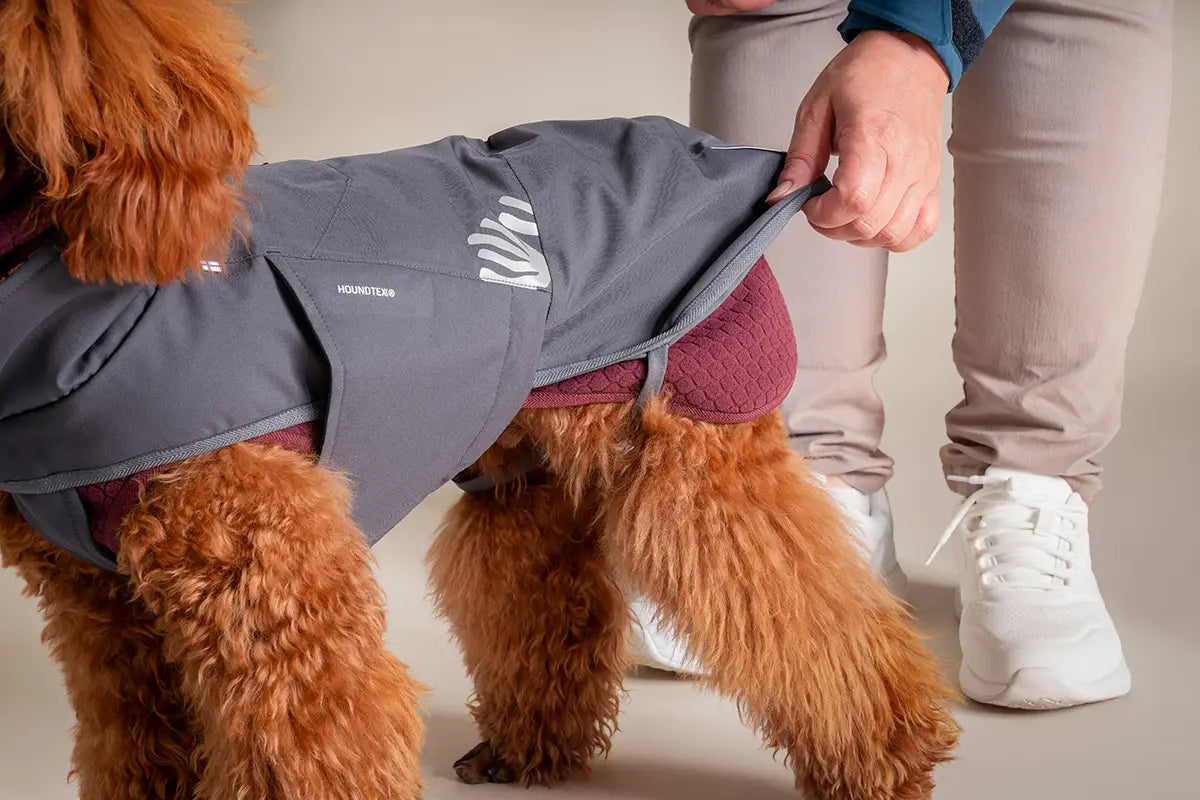
Midlayer + padded garment
For hairless or short-coated dogs, a midlayer under a padded jacket or overall brings valuable warmth and insulation. Some dogs do well with a jacket, while others prefer the full coverage of an overall. Choose what best matches your dog’s needs and comfort.
Freedom to move comes first
Remember: warmth matters, but so does freedom of movement. Clothes that rub or restrict can cause stiffness and discomfort. That’s why layered garments should fit well and be light enough to work together. Many midlayers are designed with layering in mind, made from stretchy, lightweight fabrics that easily follow the dog’s natural movements.
Another thing to consider when layering is the harness. Midlayers are shaped so the harness can sit comfortably on top, with the outer layer sliding easily over both. The leash then clips through the harness opening in the outer garment, keeping the harness protected and dry for the whole walk.
Smarter layering, fewer clothes
With the right layers, you only need a few garments to cover every season. Add or remove pieces as the weather changes and your dog will always be ready for the next adventure — warm, dry, comfortable, and free to move.
Layer by layer, adventure by adventure, in any weather.
Hurtta